Thursday, February 16, 2012

What happens when our ‘Modern Family’ breaks up?


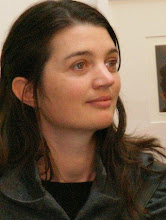
Guest Blogger: Luke Gahan (pictured)

Luke is a PhD student at the Bouverie Centre, La Trobe University. Luke's PhD research is an extension of the Work, Love, Play project. He is exploring the experiences of same-sex couples who separate after they have had children together.


One doesn’t have to look to hard these days to see same-sex parented families in the media or in popular culture. Happy rainbow families are depicted in popular TV dramas such as ‘Greys Anatomy’ with a family made up of two female doctor mums and a straight plastic surgeon father. Then there’s ‘Brothers and Sisters’ with two gay dads and their adopted child. And how could we forget the comedy hit ‘Modern Family’ with the hysterical gay dad duo Mitchell and Cameron and their adopted daughter Lily.

But what happens if same-sex parents and families breakup? How are their experiences different to opposite-sex families? Since our families are so diverse, so too will be our experiences of separation. The experiences of a bio-mum may be very different to a non-bio-mum; just as it would be for a donor dad compared to a dad via surrogacy. These are the very questions we will be exploring in a new study on separated same-sex parented families.

Same-sex couples and parents are not immune from separation, yet all too often their unique stories go unheard. Campaigns for same-sex marriage and parenting rights focus on happy couple stories. While showing the positive side of same-sex relationships and parenting makes sense in a campaign to gain equal marriage rights, it may inadvertently lead separated parents to feel isolated from friends and community.

As you are aware same-sex parents have not always had equal recognition and in some instances they still don’t. Indeed even in places where laws do protect same-sex parents, culture and attitude often lag behind, leaving some same-sex parents vulnerable or unrecognised as a parent – both before and after separation. Recent legal changes in Australia have ensured that same-sex couples are treated in a similar way to opposite-sex couples in the family court system. Yet there has been no research on whether these legal processes are working for, or are indeed appropriate for same-sex couples.

While the amendments to federal law in 2008 were extensive and a monumental step towards equal recognition of same-sex couples and their families, it did not make provisions to recognise the often radically complex makeup of same-sex parented families. Same-sex parented families can often include more than two parents and therefore several couples. Currently neither federal nor Victorian law allows for the equal legal recognition of more than two legal parents. The only option available to such families is to get a court parenting order for each parent not on the birth certificate. However, even with court parenting orders these complex yet very ‘modern family’ situations get even more complex following separation. The ways in which families and parents experience and cope with this is will be explored in our study.

One example where separation for same-sex parented families can potentially become complicated is with post separation shared parenting. Under the recent Family Law Amendment (Shared Parental Responsibility) Act 2006 (Cth), courts with family law jurisdiction in Australia now have a responsibility to consider making orders for children to spend equal or substantial time with each legal parent, where such arrangements are in the children’s best interest and reasonably practicable. This change introduced a legal presumption of equal shared parental responsibility into Australia. The reforms were responding to concerns by parents, especially fathers, but also to a range of studies that indicated many children were expressing a wish to see more of their ‘other parent’. The shared parenting presumption can be incredibly difficult in families with just two parents – what happens in situations where there are three or four parents? How does the presumption of ‘shared care’ work if there are more than two households involved? Do the parents divide the week up amongst all households or does the court usually only award shared care to two parents – and if so, why and who did they choose? Our study hopes to gain an insight into how these new laws are affecting same-sex parented families.

Previous research has shown same-sex couples and parents tend to posses egalitarian relationship and parenting styles. How this transpires after separation is unclear. However, given the findings that the most successful and positive shared care arrangements are those where both parents had active involvement in their children’s care pre-separation the egalitarian nature of same-sex couples may give them an advantage for success when attempting post-separation shared care. Through this study we will gain a better understanding of same-sex parenting post separation and will explore whether relationships remain egalitarian and lead to greater success with shared care of children.

So what would happen if Dr. Robbins and Dr. Torres separated in ‘Grey’s Anatomy’? Would they share their daughter? What about the father, you know the plastic surgeon Dr. Sloan...would he be involved in shared care? And how would ‘Modern Family’ cope if Cameron and Mitchell broke up? Perhaps you already know....Perhaps this has already happened to you. Well now is your chance to have your unique separation stories heard and understood!

We will be conducting interviews with separated same-sex parents during 2012 in Melbourne, Sydney and Brisbane. Participants must have had at least one child while within a same-sex relationship which has now ended, but they do not necessarily have to still be parenting or have custody of their child. We are keen to hear from people who have been though the family court system as well as those who made their own separation arrangements. Interviews will take between one and two hours and will be held at a time convenient to you.

If you are interested in sharing your experiences of separation and being involved in this study please contact Luke at the Bouverie Centre on (03) 9385 5137 or email him here.

Wednesday, February 8, 2012

At your service: talk to us!

At the end of last year, my colleague Henry and I held some focus groups with service providers who work with new and prospective parents: maternal child health nurses, general counsellors, family mediators, psychologists, IVF counsellors, family therapists, midwives, educators, and others working in this general field.

We wanted to know what sort of information they would like to see in resources designed to support them to improve service delivery for same-sex parented families. The workers in this group had a range of experience. Some had met just a few same-sex parented families in their professional lives. Others had met many.

I personally found the insight offered by these people to be incredibly thoughtful and complex. I had expected much more basic discussion about the need for rainbow stickers on the doorframe. But, as it turned out, people in these groups were highly tuned into the psychology and emotions of new parenting and had many thoughts about their work with same-sex parents. So I wanted to share some of what they told us.

In one session, a counsellor recounted her observations of the lesbian mothers she had met. She said, most people don’t really understand how becoming a mother might be different for lesbian mothers to heterosexual mothers. People see that lesbians might face extra discrimination, but beyond that they assume it is pretty much the same. While this isn’t an unwarranted assumption, because a lot is pretty much the same, there are some issues specific to lesbians that aren’t always acknowledged.

For example, this counsellor has met many lesbian mothers who find it incredibly confronting to admit or accept that they are having problems parenting – that they are finding it difficult or not feeling right, that they aren't happy or not enjoying their children. She explains this as the flip side of an unplanned pregnancy. A pregnancy that is highly planned, desperately desired, and potentially years in the making often brings with it pressure for the experience to be perfect. Unplanned pregnancies of course bring their own particular brand of stress. But people who have unplanned pregnancies might expect to find it hard, or not enjoy every moment or to be living in chaos for a while. People who have had to go to extraordinary lengths to become pregnant can feel like they are letting everybody down if they then become depressed or just find it difficult being a new mother.

This same counsellor also spoke about the way in which new parenthood can ‘ambush’ people emotionally. It’s not uncommon for an unanticipated well of emotion to topple new parents – the world suddenly becomes much more delicate with the awareness that life now has potential to bite, and bite hard, should anything happen to your child. Also people often come to re-live their own childhood and family experiences through parenting. This counsellor has observed many lesbian parents (and I am sure the same could hold for gay fathers too, although this woman works specifically with mothers), struggling with a fresh knot of grief about their own family relationships or coming out experience when they become mothers. Issues of acceptance and place within their family of origin were now much more intense.

People in the group also spoke about the role of the non-birth mother in lesbian relationships. Some nurses observed that it was often difficult for them, as nurses coming into the home, to understand the dynamics of lesbian couples, when those couples are also in the midst of working out their new roles as parents.

For heterosexual couples, the role of the father is much more culturally defined, even if it is an unfamiliar or awkward place for men in those early days of parenting. One nurse explained that many nurses feel awkward working with two mothers. They are conscious of not wanting to assume the non-birth mother will take on a fathering role, but equally they are not always sure of how to involve her.

Another nurse spoke about how she has noticed – but not quite known how to speak about – the often subtle and subconscious ways in which lesbian couples negotiate their parenting relationships. She has seen some couples who work extraordinarily well in partnership as two women, each highly intuitive about the other’s needs. But she has also seen couples struggle. In some cases, she has observed struggles over power and control, where one of the mothers (not necessarily the birth mother) emerges holding all the baby cards – with a greater sense of control over all things child-related in the household. She has also observed some women lapsing into insecurity, being unable to establish a sense of purpose and place in their baby's or family life. These are not necessarily issues specific to lesbians, but many nurses and counsellors are not familiar with these circumstances and find it harder to engage with lesbian couples about parenting and relationship issues than they might with a heterosexual mother.

Another counsellor spoke about how she has met lesbian non-birth mothers who experience a sense of grief about not having carried their child. This is difficult for some women to express as they are often conflicted about feeling sadness at a time that is supposed to be joyful. They feel they are not being supportive of their partner if they admit to a sense of personal loss with the birth of the baby.

I don’t have space here to explore all the points that were raised in these focus groups. We will publish something later this year, so watch this space. Some other issues raised were: how to engage gay fathers who have children via surrogacy in maternal child health services, how to engage gay fathers in ‘mother’s groups’, how to create appropriate support services for non-birthmothers (beyond joining the ‘dad’s group’), how to assist families to negotiate co-parenting arrangements with donors and so forth.

I found it fascinating, and incredibly heartening, that these nurses and other workers were able to articulate such honest and nuanced observations of the same-sex couples with whom they have worked. They were genuinely concerned about what they could do to help these couples through a stressful life change. They said they would love more information that might help workers who hadn’t met many same-sex families to feel more confident in talking to families, even simple resources about what questions to ask, what terms to use with two parents of the same gender and so forth. But they were also keen on information that explores some of the more complex issues of same-sex parenting and relationships.

So now parents, we want you!

For the next stage of this research we are keen to speak to parents. We are hosting a focus group for same-sex attracted parents (who are in a couple or single) to speak about their experiences with the mainstream service sector and what resources they would like to see produced for both parents and service providers.

If you live in Melbourne and might be available to talk to us, we a hosting a lunchtime focus group:

Wednesday 7th March
12.15pm
Lunch will be provided
Children are welcome (we have toys)
The Bouverie Centre
8 Gardiner st, Brunswick, Melbourne
If you would like to attend, please RSVP to Henry at h.vondoussa@latrobe.edu.au
or call Jen on 9385 5131 (leave a message if I don’t answer!).

We realise that this timeslot will not be a good one for people who work, or people’s who have children with midday sleep requirements. So if you can’t make this time but are still keen to be involved, please get in touch anyway as we will try and arrange another time and/or some phone interviews as well.

Hope we get to talk soon


Monday, December 5, 2011

Matilda's Project: the power of storytelling


Matilda's Project: a play about family diversity
 There is a video that has been doing the viral rounds on facebook and email lately. You might have seen it. It's called, “Two Lesbians Raised a Baby and This is What They Got.”

The video is of a clean-cut, sensible looking lad, Zach Wahl, speaking at the hearing of a bill to ban marriage for same-sex couples in Iowa, USA. Zach was raised with lesbian mothers and makes a touching appeal for people to recognise the normality and ‘goodness’ of his family life. I have to confess to a brief teary moment listening to this. I would be very proud to be one of this kid’s Moms.

However, the second time I watched it, I felt a bit irritated by its blatant appeal to ‘normal’. Why can’t people accept us even if we don’t fit this image of whitebread ‘normality’? If my son spends his teenage years sporting gothic-black eyeliner and reading Sylvia Plath (as I suspect he well might) can he still stand up and make an appeal for how great his family is? This is not to undermine the importance or impact of Zach’s speech (it’s a beautiful speech). But I think we need to remember our families and our kids – especially our kids –are great in all their diversity.


All that being said, it's a great thing that Zach’s video has gone viral. Apparently when it was posted on Facebook, it generated over 1,000,000 ‘likes’ or ‘shares’ within 24 hours. Dana Rudolph, who writes the Mombian blog (check it out if you haven’t already), makes a good point about why this video is so powerful. It tells a story. She writes, “Storytelling lies at the heart of the human experience. It is something we expose our children to almost from birth, and cuts across time and cultures. Never underestimate the staying power—or the transformative power—of a good story.”

Stories generate emotional connection between people and 'issues' in a way that facts, figures and arguments will never do. We often forget about the role of emotion in political action. It is the implicit subtext to almost all political argument. At the end of the day, it is often the appeal to emotion, rather than rational argument, that changes minds (hearts?)… and policies.

But stories are also simply great tools for exploring human experience. People read reflections of their own lives and the world they inhabit. Stories help people make sense of their place in the world and the weird, wacky, confusing processes that keep society ticking over.

Wednesday, October 12, 2011

Public displays of affection: the rest will follow

Recently about town I have spotted posters advertising hand-holding. Specifically, gay hand-holding. They are simple black and white bill-posters which offer no sense that the folk who produced them (the unidentified, guerrilla hand-holding campaigners) had a budget. They could have been made on a photocopier. Just a silhouette of two men holding hands and the slogan ‘why hide it?’ Women are told to do it anywhere. The rest will follow.


The first time I came across this poster I stopped for a little stare, wondering where I stood with its slogan. Political message wrapped up in a cute little action plan. Hold hands. Be out and proud. Challenge the world. Nice in theory, fine in Brunswick street, possibly dangerous in other spaces. Or at least uncomfortable.

Tuesday, September 6, 2011

Gay marriage, fatherlessness: not one and the same

In celebration of Father’s Day, The Australian ran two pieces that took a stab at gay marriage, bizzarely linking it with the problem of fatherlessness in general and custody rights of divorced fathers. 

Angela Shannahan (‘Children Suffer Under Political Correctness’) and Jeremy Sammut (‘Women’s Rights Push Dad’s Aside’) both refer to a recent NSW court ruling, that I have written about previously, in which a father was removed from his daughter’s birth certificate to enable her two mothers to be listed. They cite this case as evidence that society is increasingly ignoring the importance of fathers in children’s lives. They also suggest that gay marriage will inevitably lead to tragic situations such as this where children are denied access to their father.

Their arguments, however, miss several important points about this case. Firstly, the child had a close parental bond with both of her mothers as well as her father. It would have been a tragedy for her to lose her bond with the mother she had always known and loved, just as much as it would have been a tragedy for her to lose her bond with her father. (Which, it is worth noting, is not a fait acompli in this case. The father still has a parenting order granting him legal parenting rights). It was in the best interests of this child to have all her parental figures acknowledged.

Secondly, the non-biological mother in this case felt she needed to be on the birth certificate so she could demonstrate her legal right to make parenting decisions for her child. It is certainly in the best interests of any child that the parent who is caring for them has the right to make decisions about medical treatment, schooling and so forth.

Unfortunately, in order for the non-biological mother in this case to attain the parental security that came with being listed on a birth certificate, the child’s father had to be removed from it. This was a wholly inadequate outcome because it didn’t appropriately reflect the true makeup of this child’s family. Even the judge in this case, NSW District Court Judge Stephen Walmsley, expressed discomfort with his decision and argued that birth certificates should have provisions for more than two parents. Sadly, the most likely outcome of a case like this is heightened insecurity and conflict between the parents – the worst possible situation for this child.

Tuesday, August 30, 2011

I capture the family

I thought I had a personal policy of ignoring crazy conservatives. It drives me nuts that someone like Andrew Bolt gets so much attention for his illogical rantings. Not to mention Fred Nile, Alan Jones, Pauline Hanson or anyone else guaranteed to provide a controversial comment or two on request. But I have discovered it’s actually quite difficult to stick to this policy when writing about ‘gay issues’; even more so when writing about ‘gay FAMILY issues’. Just look at my last few posts. Who is featured? Bob Katter. Miranda Devine. Barnaby Joyce. Joh Bjelke-Peterson.

Why is it that every time an issue relating to marriage or families emerges on the political horizon, the extreme right are given so much airplay? Is it simply an effort to achieved balanced journalism? Or do loopy opinions just sell more papers? Or perhaps conservatives tend to have louder voices and deeper pockets?

Part of the problem is that the extreme right – and the Christian right – have been so successful in capturing ‘family values’ as their own. 'Family values’ is really a euphemism for white, Christian, heterosexual supremacy. Yet it seems that public figures who claim the protection of ‘family values’ as their raison d'ĂȘtre are consulted on EVERYTHING related to love, relationships and sex. For some crazy reason, self-identified defenders of the family are afforded expert status on matters relating to the private lives of gay people they have never met, lesbian mothers they have not once spoken to and transgendered folk who they chose to ignore. (Not to mention women who chose to have an abortion).

So why doesn’t the political left stake their own claim on ‘family values’?

Wednesday, August 24, 2011

The family closet: Bob Katter and his brother

Bob Katter is the new Sir Joh. A right wing nutter, most famous for his ludicrous conservative commentary. He is like Pauline Hanson or Wilson Tuckey on a good day, giving voice to the extreme conservatism which makes irresistible fodder for send up.

In some ways a person like Katter is less politically dangerous than savvier politicians -- those who publicly present as more moderate but are actually quite difficult to pin-down and challenge. At least Katter is often dismissed as just plain loopy.

But loopy or not, Katter has some pretty hurtful things to say about gay men and lesbians. Last week he made headlines for vitriolically encouraging people to "laugh at” and "ridicule" the concept of gay marriage. He also announced his campaign to reclaim the word ‘gay’; a perfectly “healthy adjective” that has become captive to the gay lobby. (Ok, that last bit was a bit ridiculous and funny as well as offensive.)

So it is interesting that this morning nearly every newspaper in the country seems to be carrying pictures of Carl Katter. Carl Katter is Bob Katter’s brother. And Carl is gay. On national TV last night, Carl commented on Katter’s expressed views about homosexuality, saying, ''It's hurtful, it's dangerous, it's damaging and it's really inappropriate”. He also said that should he meet the right man, he would like to get married, although Katter would be an expected no-show at the wedding.

So what is it about Bob Katter having a gay brother that excites the media? Part of me thinks it is just a fine opportunity to lampoon him. In one of Katter’s infamous quotes he stated that he would ''walk to Bourke backwards if the poof population of North Queensland is any more than 0.001 per cent''. Haha! Got you there Bob! That 0.001 percent was eating his cornflakes at your breakfast table.

But there is also something powerful about a family member of a public homophobe outing themselves. It reminds the world that no matter how much distance someone tries to create between themself and the scourge of gay humanity, every family has its closet.